

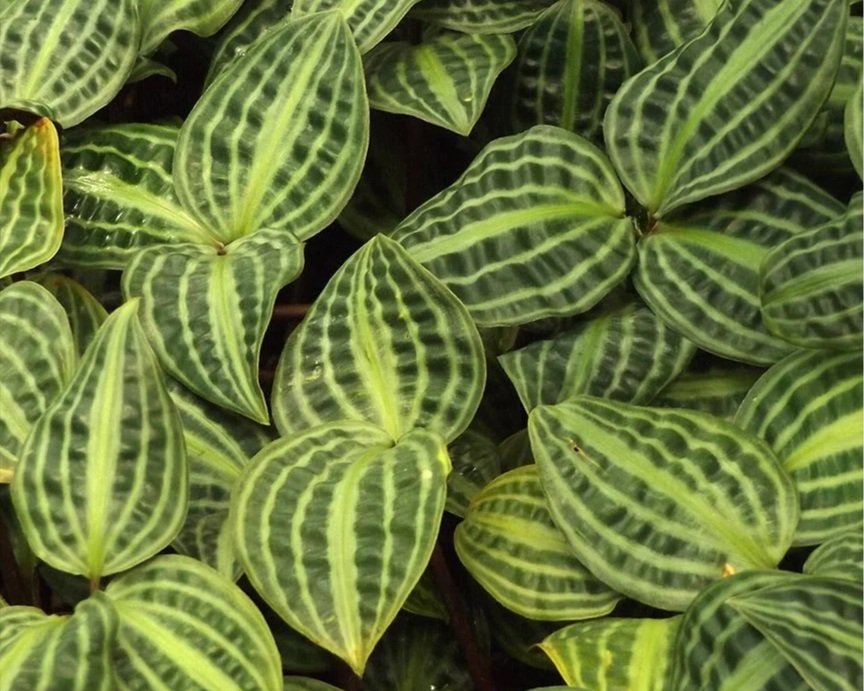
Geogenanthus
Geogenanthus are known for their unique crinkled textured leaves. They’re pretty low-maintenance, making them a great plant for beginners and collectors alike.
-
Your Geogenanthus plant, with its gorgeous, unique foliage, loves a cozy spot with medium to bright, indirect light. Think of it like its natural home on the rainforest floor, where the sun's rays are softly filtered through a dense canopy of trees.
An east-facing window is a perfect choice, as it provides gentle morning sun. You can also place it in a shady corner of a well-lit room or a few feet away from a brighter window.
It's important to keep your Geo plant away from direct sunlight, especially the harsh afternoon sun. Too much direct light can easily scorch its leaves, causing them to turn crispy and brown. While it can survive in low light, its beautiful colors may start to fade if it doesn't get enough gentle light.
-
Your Geogenanthus plant loves consistent moisture! Think of its native home in the jungle—it enjoys soil that's always a little damp, but never soaked.
The best way to water is to check the soil every few days. When the top inch feels just slightly dry, it's time for a drink. Water thoroughly until it drains from the bottom, then make sure to empty any excess water from the saucer. This is a key step to prevent root rot.
These plants are also humidity lovers. If you notice the leaf edges turning crispy, it's a sign the air is too dry. Placing your plant near a humidifier or on a pebble tray is a great way to keep it happy and healthy!
-
Getting the soil right for your Geogenanthus is one of the best ways to keep it thriving! Since these plants are from the rainforest floor, they need a mix that is both rich in organic matter and excellent at draining water. This balanced approach ensures the soil stays consistently moist without ever becoming soggy, which is vital for preventing root rot.
Regular potting soil is often too heavy. To create the perfect blend, try adding chunky amendments like perlite, pumice, or even orchid bark to a quality potting mix. This makes the soil light and airy, allowing your plant's roots to breathe and stay happy.