

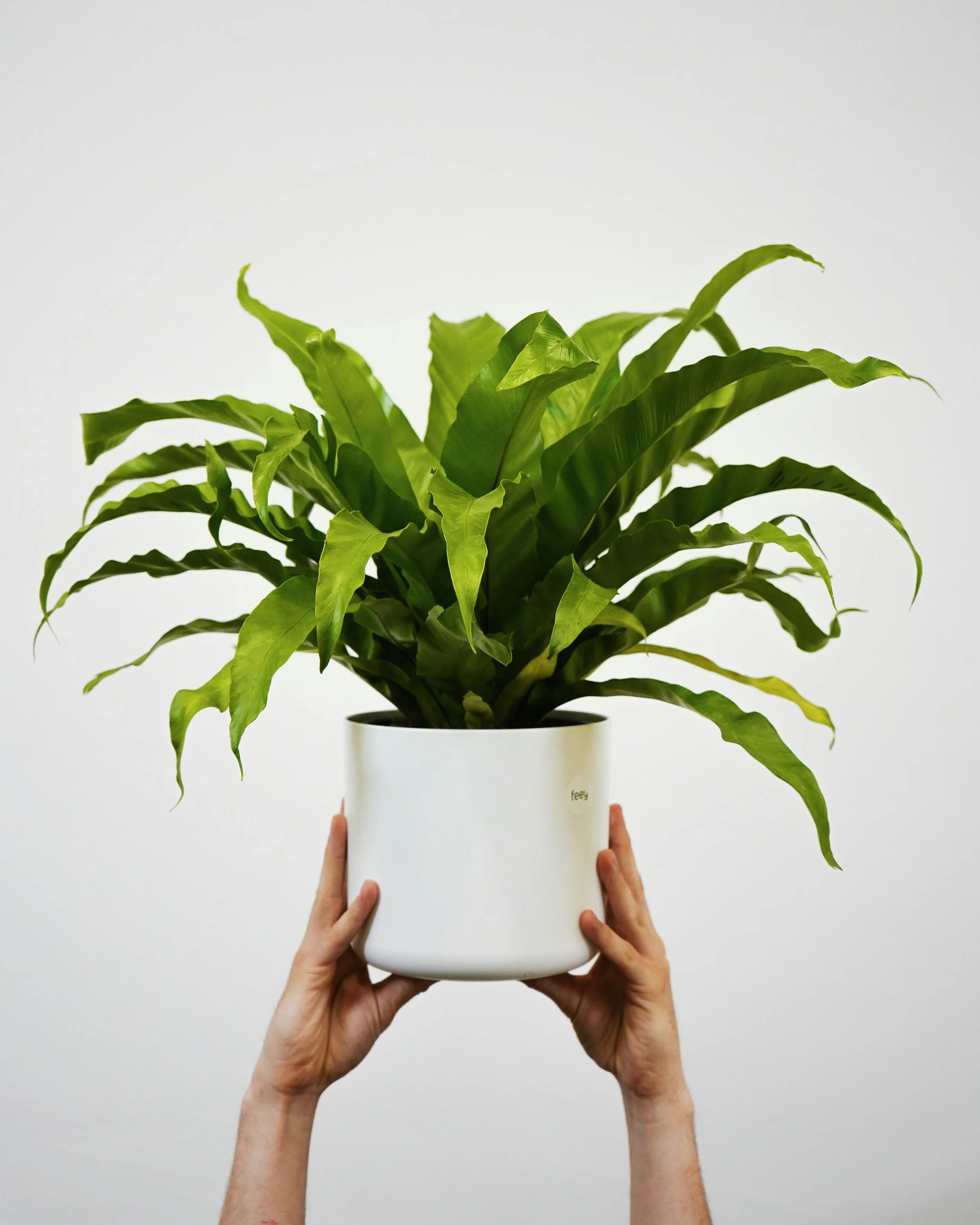
Bird’s Nest Fern
Ferns grow on the ground in tropical forests, therefore it’s no surprise that they prefer brightly lit shady areas and high humidity. Bird’s Nest Ferns are known for their long rippled leaves that hang over, making a perfect “seat” for a bird’s nest.
-
Bird’s Nest Ferns do best in bright indirect light. Direct light can scorch the leaves. They’re tolerant of more moderate indirect light, however, too low of light will slow thier growth so we recommend bright indirect light for optimal growth.
-
Ferns prefer evenly moist soil. Check the soil by sticking your finger about 1–2 inches deep. If it feels dry, it's time to water. If it still feels moist, wait a few more days.
When you water, make sure to water thoroughly so that the excess drains out of the bottom of the pot. This ensures the roots get a good drink.
Ferns also prefer high humidity. They do well in bathrooms near a window or with a humidifier nearby.
Bird’s Nest ferns are more forgiving than other fern varieties, however, they prefer not to dry out completely.
-
Ferns prefer a light, well-draining, but moisture-retaining soil. A standard houseplant mix works well, but adding a little perlite or orchid bark for extra aeration can be helpful. Orchid bark and moss can also help with retaining moisture.
During the growing season (typically spring and summer), you can fertilize your Fern about once a month. In fall and winter, when the plant is generally in a dormant phase, it’s best to reduce fertilizing or stop altogether.
Occasionally fertilizing and repotting, you’ll encourage steady growth and keep your Fern looking lush and vibrant.