

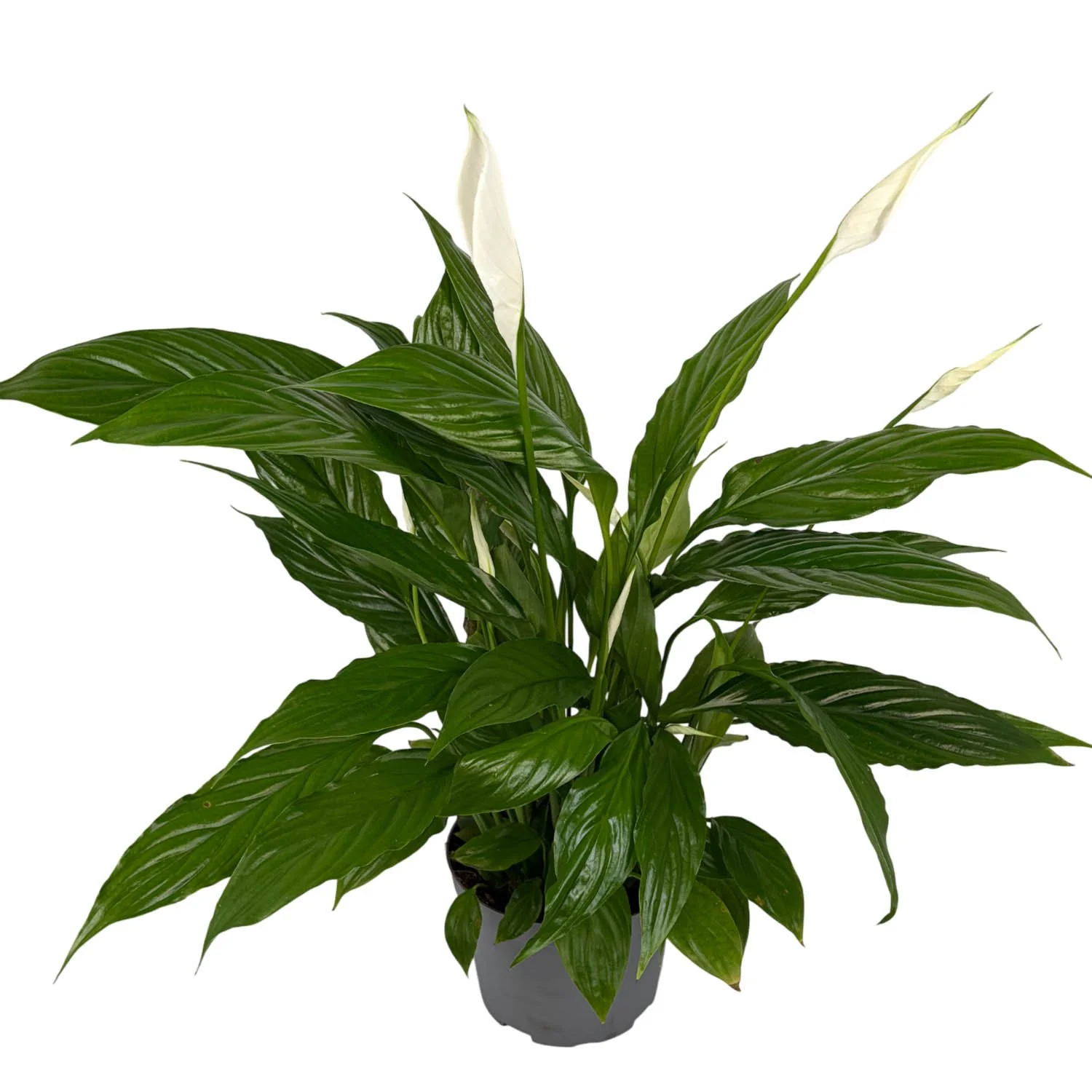
Spathiphyllum
Spathiphyllum, oftentimes called “Peace Lilies,” are known for their white flowers symbolizing “peace” and are oftentimes gifted as a sympathy plant.
-
Their ability to thrive in a wide range of light conditions—from bright, indirect light to low light—makes them adaptable to many environments.
Even in low light, they may grow a bit slower and not flower as often, but they can still survive. If you're aiming for the best growth, providing them with bright, indirect light will be ideal.
-
Peace lily prefer to dry out most of the way in between waterings. Too much water can cause the leaves to yellow. However, peace lilies can be quite dramatic and will droop drastically when they’re too dry. But if you give them a good soaking, they’ll perk right back up.
Check the soil by sticking your finger about 1–2 inches deep. If it feels dry, it's time to water. If it still feels moist, wait a few more days.
When you water, make sure to water thoroughly so that the excess drains out of the bottom of the pot. This ensures the roots get a good drink.
-
Spathiphyllum prefer a light, well-draining soil. A standard houseplant mix works well, but adding a little perlite or orchid bark for extra aeration can be helpful.
During the growing season (typically spring and summer), you can fertilize your plant about once a month. In fall and winter, when the plant is generally in a dormant phase, it’s best to reduce fertilizing or stop altogether.
Occasionally fertilizing and repotting, you’ll encourage steady growth and keep your plant looking lush and vibrant.