

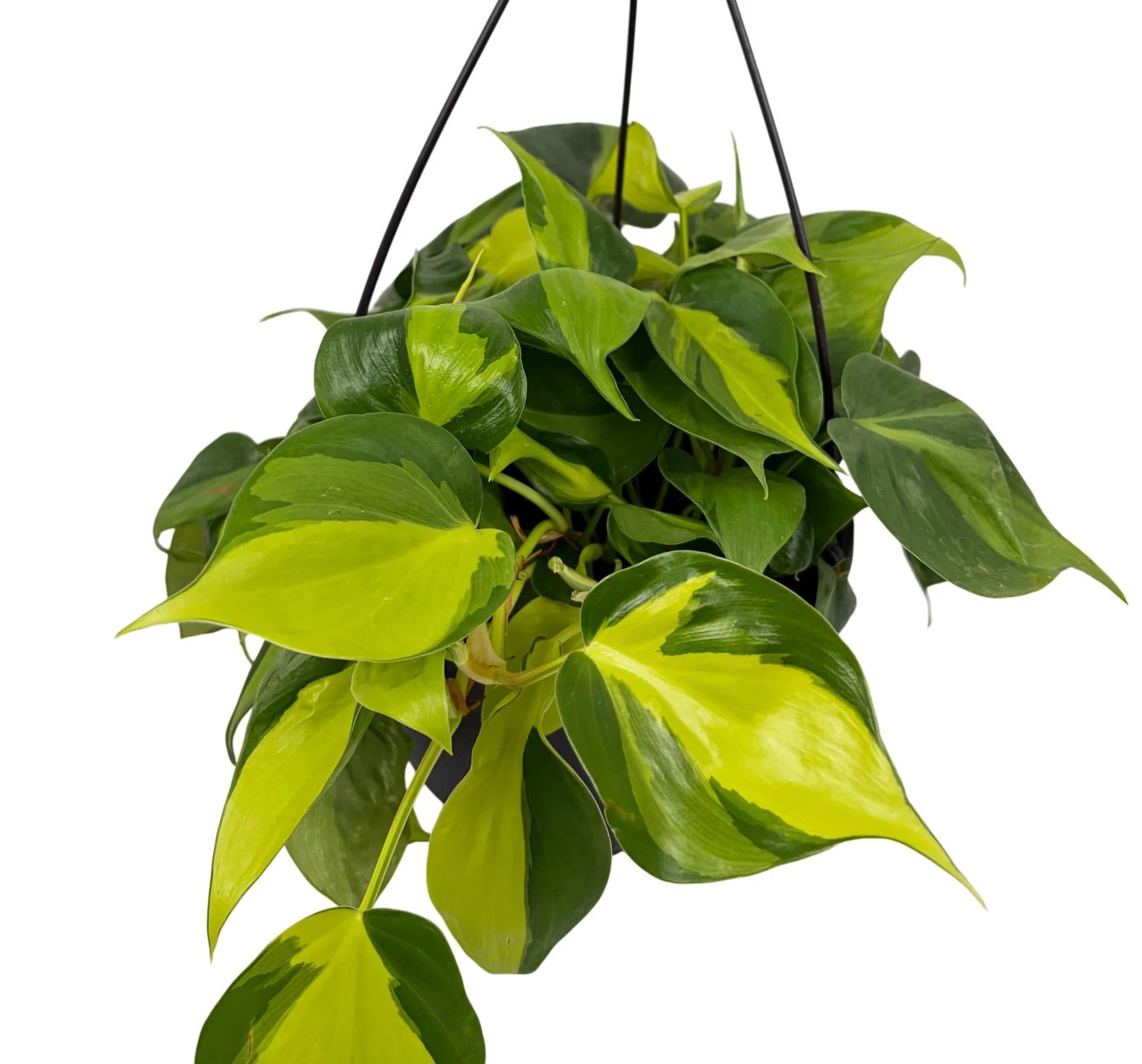
Philodendron
Philodendron are low-maintenance and come in many varietals, making them a popular choice for both beginners and experienced plant lovers.
-
For a healthy philodendron, provide bright, indirect sunlight. This mimics their natural habitat where they receive filtered light.
Avoid direct sun, which can scorch the leaves and cause brown or yellow patches. Place the plant a few feet away from a sunny window or use a sheer curtain.
While the plant can survive in low light, it won't thrive. Growth will slow, and the plant may become "leggy" as it stretches for more light.
Signs of improper light: Too much light leads to burnt leaves, while too little light results in slow, leggy growth. An east-facing window is a great spot, as it provides gentle morning sun.
-
For a healthy philodendron, proper watering is crucial, as they are susceptible to both overwatering and underwatering. The goal is to keep the soil consistently moist but not waterlogged.
Here's a breakdown of the key water requirements:
Check the soil first: The most important rule is to water only when the top 1-2 inches of soil are dry. You can check this by sticking your finger into the soil. Don't water on a fixed schedule, as the frequency will depend on factors like light, humidity, and the time of year.
Water thoroughly: When you do water, do so generously until you see water draining from the bottom of the pot. This ensures that the entire root system gets a good drink. Always empty any excess water from the saucer to prevent the plant from sitting in soggy soil, which can lead to root rot.
Signs of overwatering: This is the most common mistake with philodendrons. Signs include yellowing leaves, especially the younger ones, and the plant looking droopy or limp even though the soil is wet. The soil may also develop a foul smell.
Signs of underwatering: If a philodendron is thirsty, its leaves will often start to droop or wilt, and the soil will be completely dry. The leaves may also become crispy or turn brown at the tips.
Adjust for the season: Philodendron have a growth spurt in the spring and summer and require more frequent watering during these months. Their growth slows down in the fall and winter, so you should reduce the watering frequency accordingly.
-
For a healthy philodendron, the soil is a critical factor. The best soil will be airy, well-draining, and rich in organic matter. This is key to preventing root rot while providing the nutrients they need to thrive.
Excellent drainage is the most important requirement, as philodendrons hate having "wet feet." The soil should also be able to retain some moisture to keep roots hydrated. It needs to be rich in nutrients and have a slightly acidic pH, typically ranging from 5.5 to 6.5.
Many people create their own mix using a base of potting soil. Key additions like perlite, pumice, or orchid bark are essential to create air pockets and improve drainage. Ingredients like coco coir or sphagnum moss help retain moisture while providing nutrients. A simple but effective mix can be a ratio of one part each of potting soil, orchid bark, and perlite.
If you prefer a pre-made solution, look for commercial "Aroid mixes" designed for plants like philodendrons and monstera.