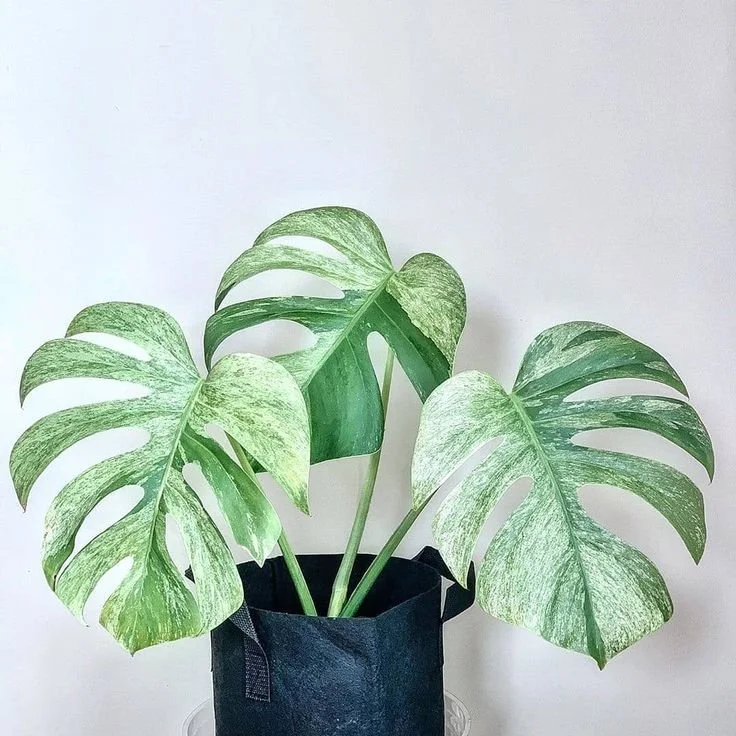
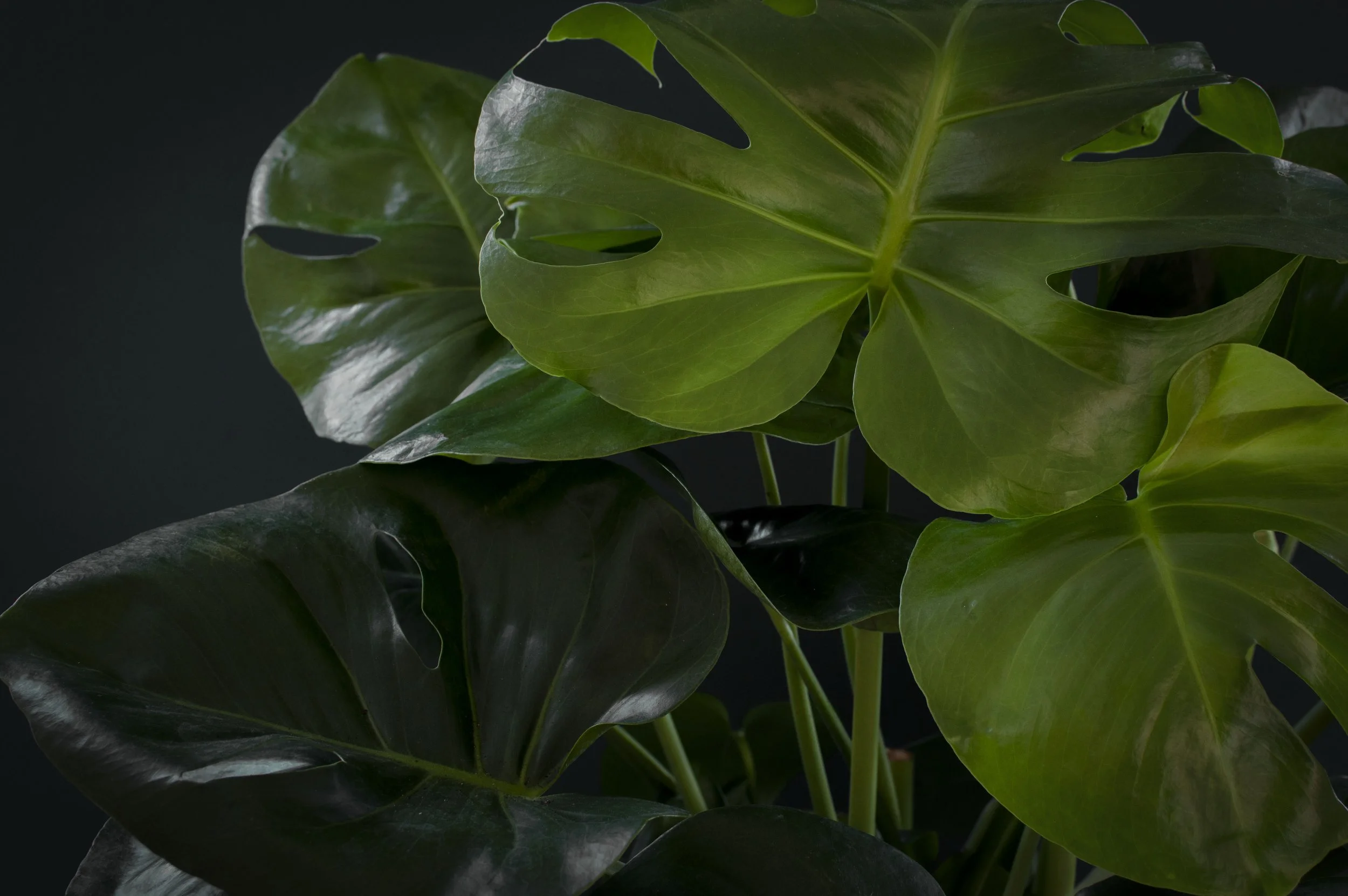
Monstera Deliciosa
When you think of houseplants, you probably think of the iconic Monstera Deliciosa, know for its fenestration (splits) in its leaves. The Monstera’s leaves split in order to allow sunlight to reach the lower leaves on the plant.
-
For a happy and healthy Monstera plant bright, indirect sunlight is ideal. This mimics its native environment in the tropical rainforest, where it receives filtered light through the tree canopy.
Ideal Placement: A few feet back from a south-facing window, or in a spot with an east-facing window, provides the perfect amount of gentle light. You can also use a sheer curtain to diffuse intense sun from a west-facing window.
Avoid Direct Sun: Direct, harsh sunlight can easily scorch the delicate leaves, leading to brown, crispy patches. The leaves may also look pale or bleached out.
Low Light Issues: While they can survive in low light, they will not thrive. Insufficient light will lead to slow growth and the plant becoming "leggy," with long stems and fewer, smaller leaves as it stretches to find light.
Signs of Trouble: Burnt spots or a pale appearance indicate too much sun. Slowed growth and a leggy form are signs of insufficient light.
-
Monstera plants prefer to dry out most of the way in between waterings. Letting the soil dry out between waterings helps prevent root rot, which is one of the most common issues with Monstera care.
Check the soil by sticking your finger about 1–2 inches deep. If it feels dry, it's time to water. If it still feels moist, wait a few more days.
When you water, make sure to water thoroughly so that the excess drains out of the bottom of the pot. This ensures the roots get a good drink.
-
For your Monstera plant to be happy, the right soil is so important. The perfect soil is airy, well-draining, and rich in nutrients.
This special combination helps prevent the most common problem: root rot. A good soil will allow extra water to drain away quickly, but still hold onto enough moisture to keep the roots hydrated.
Since regular potting soil can be too dense, many plant lovers create their own mix. A popular and simple recipe is to blend one part potting soil, one part perlite for great drainage, and one part orchid bark for aeration. This helps keep the roots healthy and happy. If you prefer, a pre-made "Aroid mix" works perfectly too!
Pick Your Variety:
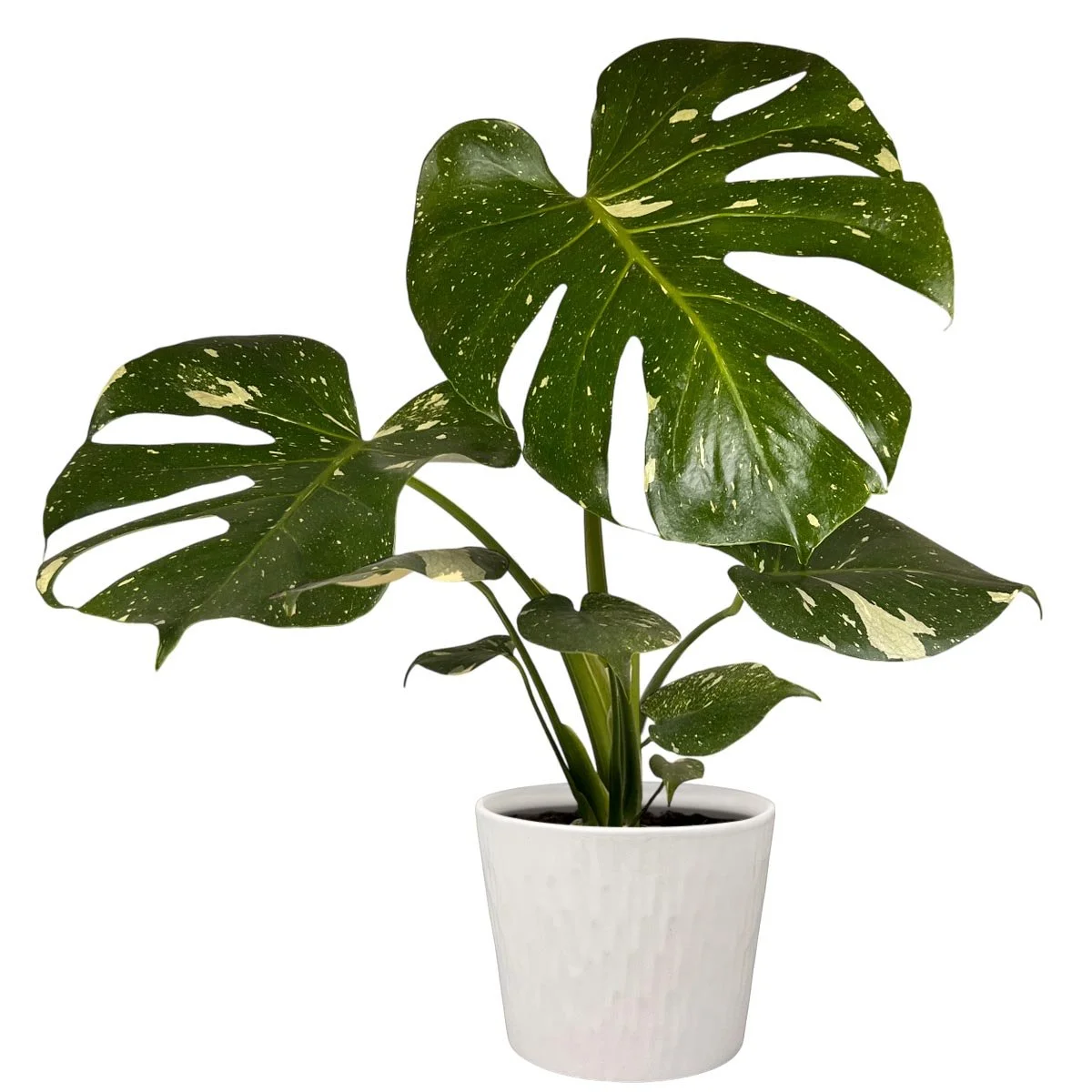
Monstera Deliciosa Thai Constellation