

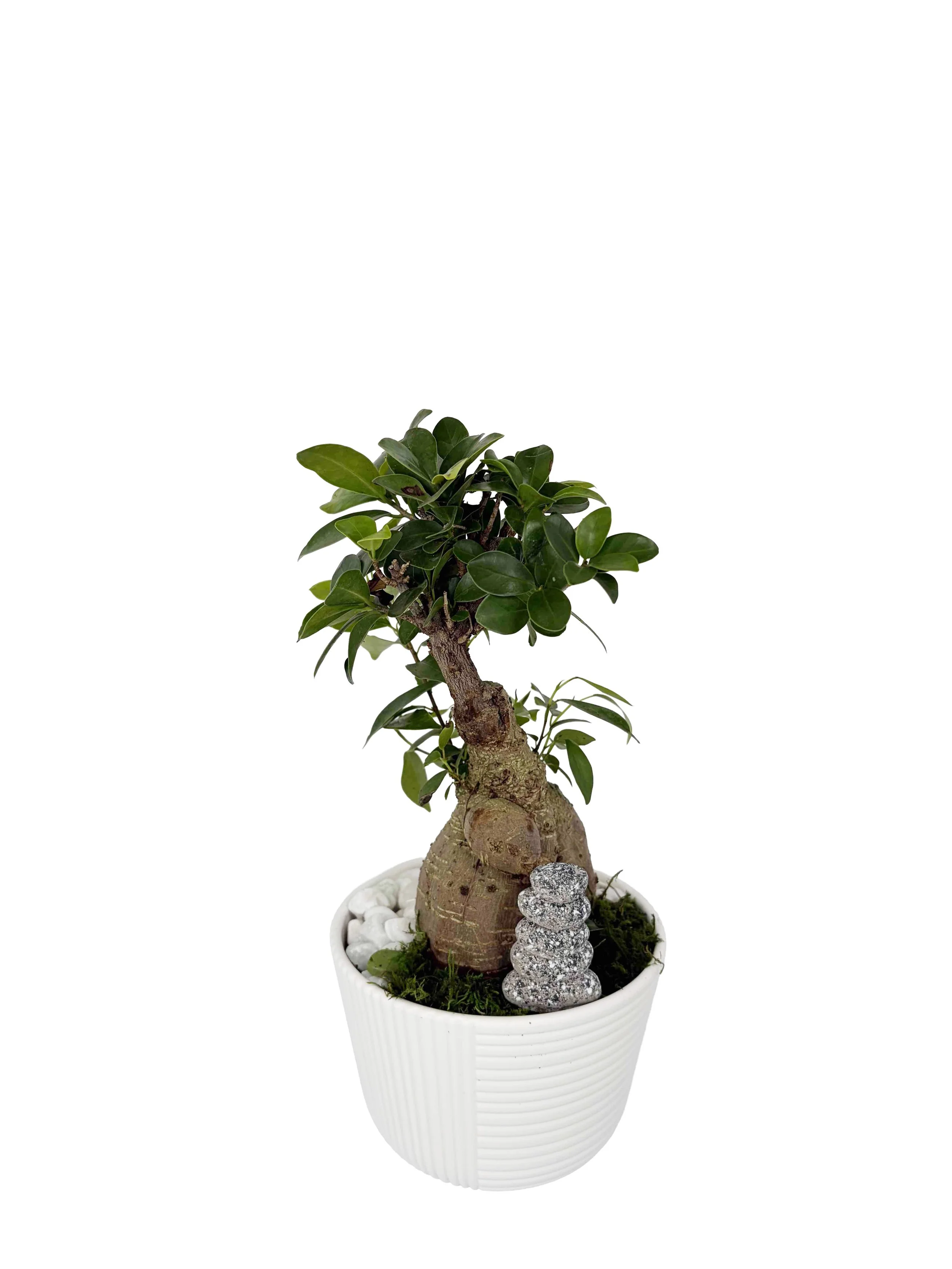
Ficus Ginseng
Ficus Ginseng is a bonsai plant known for its thick trunk and small leaves and branches. They symbolize balance and longevity, making them a popular houseplant.
-
Ficus Ginseng prefer bright indirect light to thrive.
Direct sunlight can scorch their delicate leaves, causing them to become brown or faded. It’s important to place them in a spot with lots of natural light but not direct exposure to the sun's rays.
However, not enough light can cause slowed growth and yellow leaves.
Placing them in an east facing window or near a south facing window should provide ideal lighting for them to thrive.
-
Ficus Ginseng prefer to dry out about halfway between waterings. Letting the soil dry out between waterings helps prevent root rot, which is one of the most common issues with ficus ginseng as their roots are very thin. However, if you let them dry out too much, the trunks will shrivel.
Check the soil by sticking your finger about 1–2 inches deep. If it feels dry, it's time to water. If it still feels moist, wait a few more days.
When you water, make sure to water thoroughly so that the excess drains out of the bottom of the pot. This ensures the roots get a good drink.
-
Ficus Ginseng prefer a light, well-draining soil. A cactus or succulent mix should work well. Although you can make your own by adding peat moss and perlite to a standard indoor plant mix to add aeration and help with drainage.
During the growing season (typically spring and summer), you can fertilize your ficus about once a month. In fall and winter, when the plant is generally in a dormant phase, it’s best to reduce fertilizing or stop altogether.
Occasionally fertilizing and repotting, you’ll encourage steady growth and keep your ficus looking lush and vibrant.