Begonia
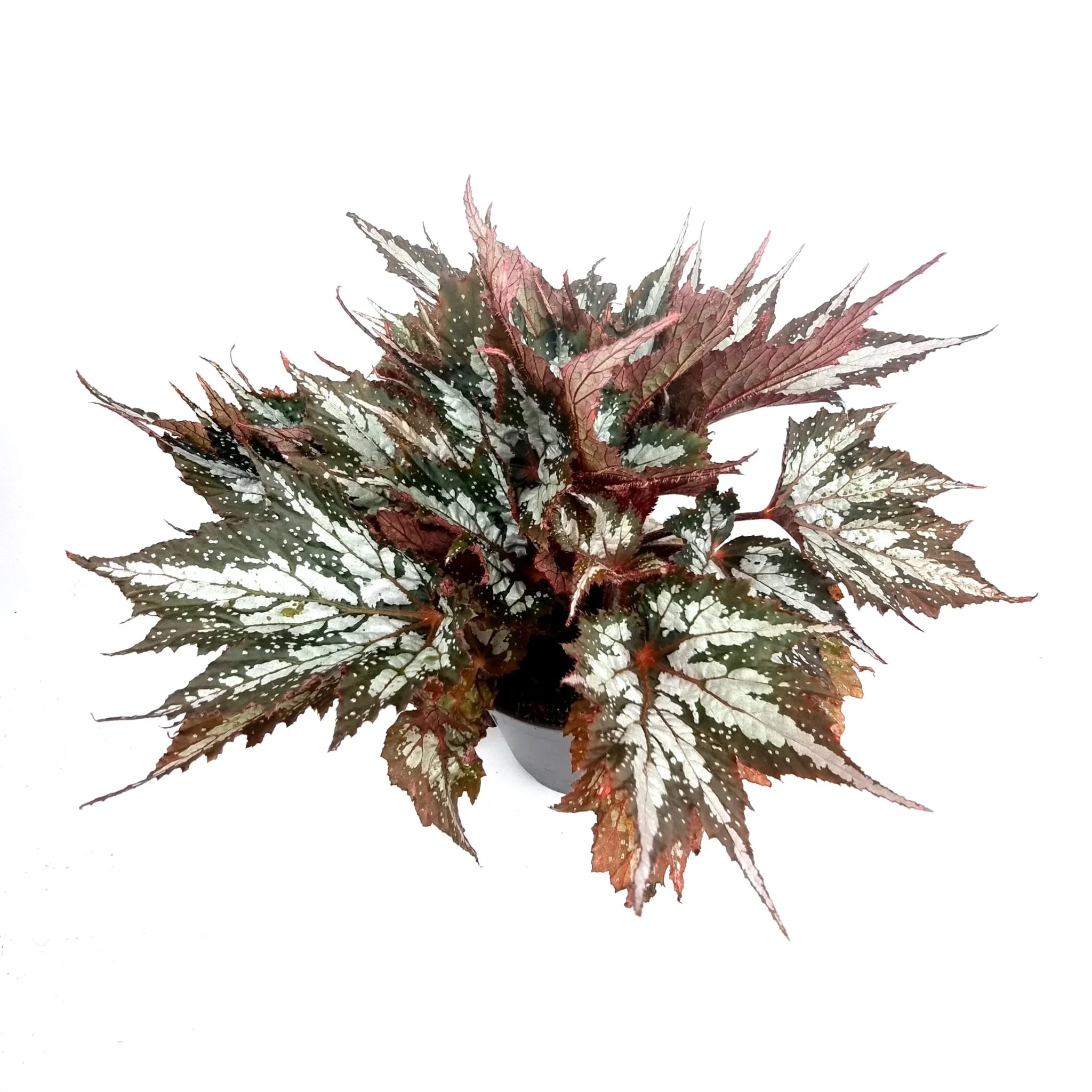
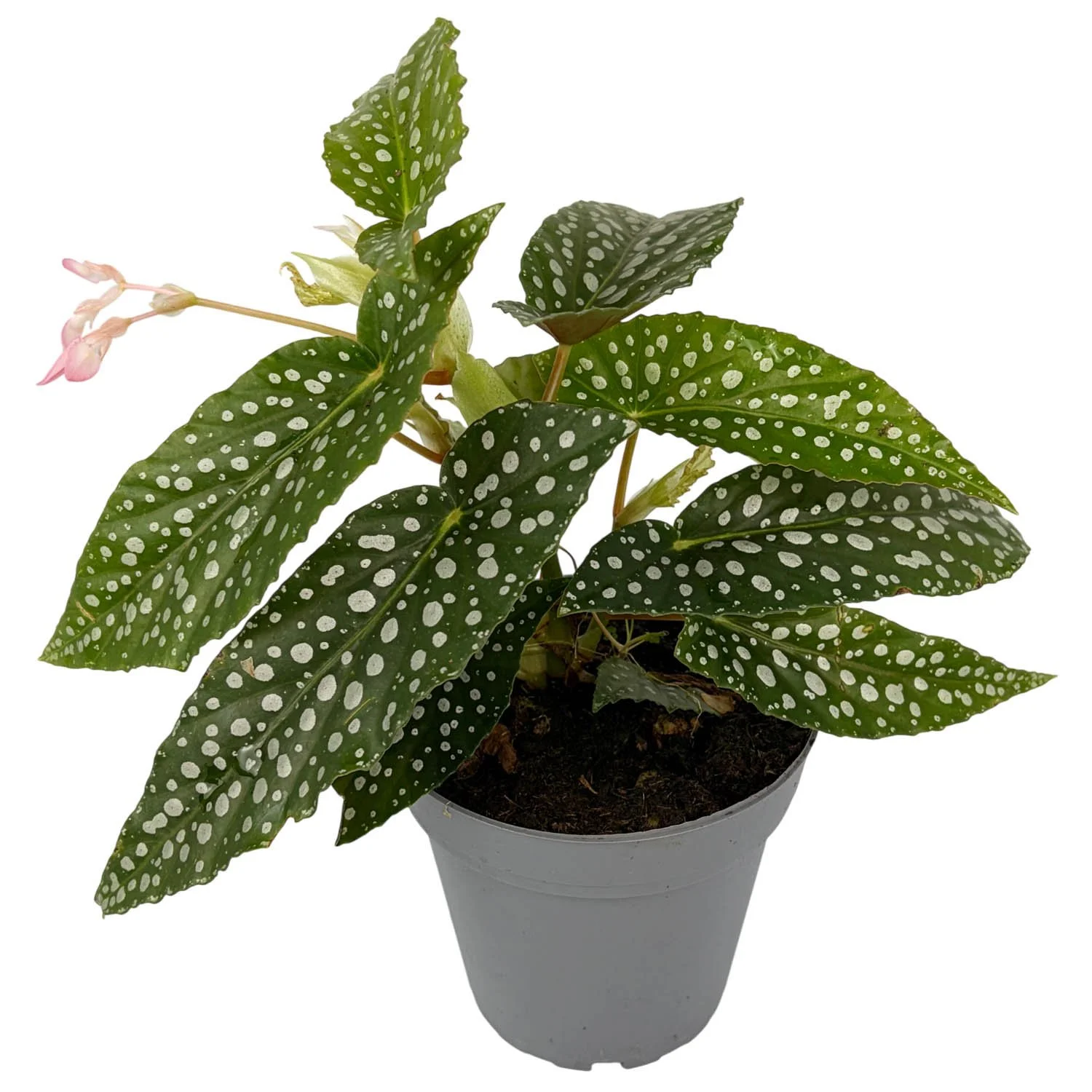
Begonia feature stunning patterned leaves and vibrant, eye-catching flowers. There are over 2,000 species. The most common indoor varieties are “angel wing” or Rex Begonia and the most common outdoor variety are wax Begonia.
-
For a healthy Begonia, the primary light requirement is bright, indirect sunlight. This mimics their natural environment as understory plants, where they receive filtered light.
Bright, indirect light promotes healthy, vigorous growth and is essential for most Begonias to produce flowers. An east-facing window is an excellent choice as it provides gentle morning sun. A south or west-facing window works if the light is diffused by a sheer curtain.
Direct sun can easily scorch a Begonia's leaves, leading to brown, crispy patches or a bleached-out appearance. Leaves of some varieties, like Rex Begonias, are particularly sensitive to sunburn.
While some Begonias can tolerate low-light, it is not ideal for their health. Growth will slow down, and they are unlikely to produce blooms. Stems may also become "leggy," stretching out with fewer leaves.
The light needs vary by type; Rex Begonias generally prefer slightly lower light but still need bright, indirect light to maintain their colorful foliage.
-
For a healthy Begonia, the key to watering is a delicate balance. They need to be kept consistently moist but are extremely sensitive to being waterlogged, which can quickly lead to root rot.
The most important rule is to water only when the top 1-2 inches of soil feel dry. Avoid a strict watering schedule, as their needs change with the season, light, and temperature. When watering, do so thoroughly until it drains from the bottom of the pot. Always empty any excess water from the saucer to prevent the plant from sitting in soggy conditions.
Begonias require more water during their active growing season; in the fall and winter, reduce the watering frequency significantly to prevent rot.
Signs of overwatering include drooping or yellowing leaves and mushy stems. Underwatering causes leaves to wilt and turn brown and crispy at the edges. It is always safer underwater, as a thirsty Begonia is much easier to save than one with root rot.
-
For a healthy Begonia, the soil is a critical factor, as they are very sensitive to improper moisture levels. The best soil will be light, well-draining, and rich in organic matter, with a balance between retaining some moisture and allowing roots to breathe.
The most important requirement is excellent drainage; the mix must allow excess water to flow out quickly to prevent root rot. While it needs to drain well, the soil should also hold enough moisture to keep the roots hydrated. Begonias are heavy feeders, so the soil should be rich in nutrients and have a slightly acidic pH ranging from 5.5 to 6.5.
Because standard potting mix is often too dense, many growers create their own custom blends. An effective DIY mix includes a base of high-quality, peat-based potting mix, with additions like perlite or coarse sand for aeration and drainage. Ingredients like peat moss or compost help retain moisture while providing nutrients. A simple and effective ratio is two parts potting soil, one part perlite, and one part peat moss. You can also find commercial "Begonia mixes" that are formulated to have the right balance of these properties.
Pick Your Variety:
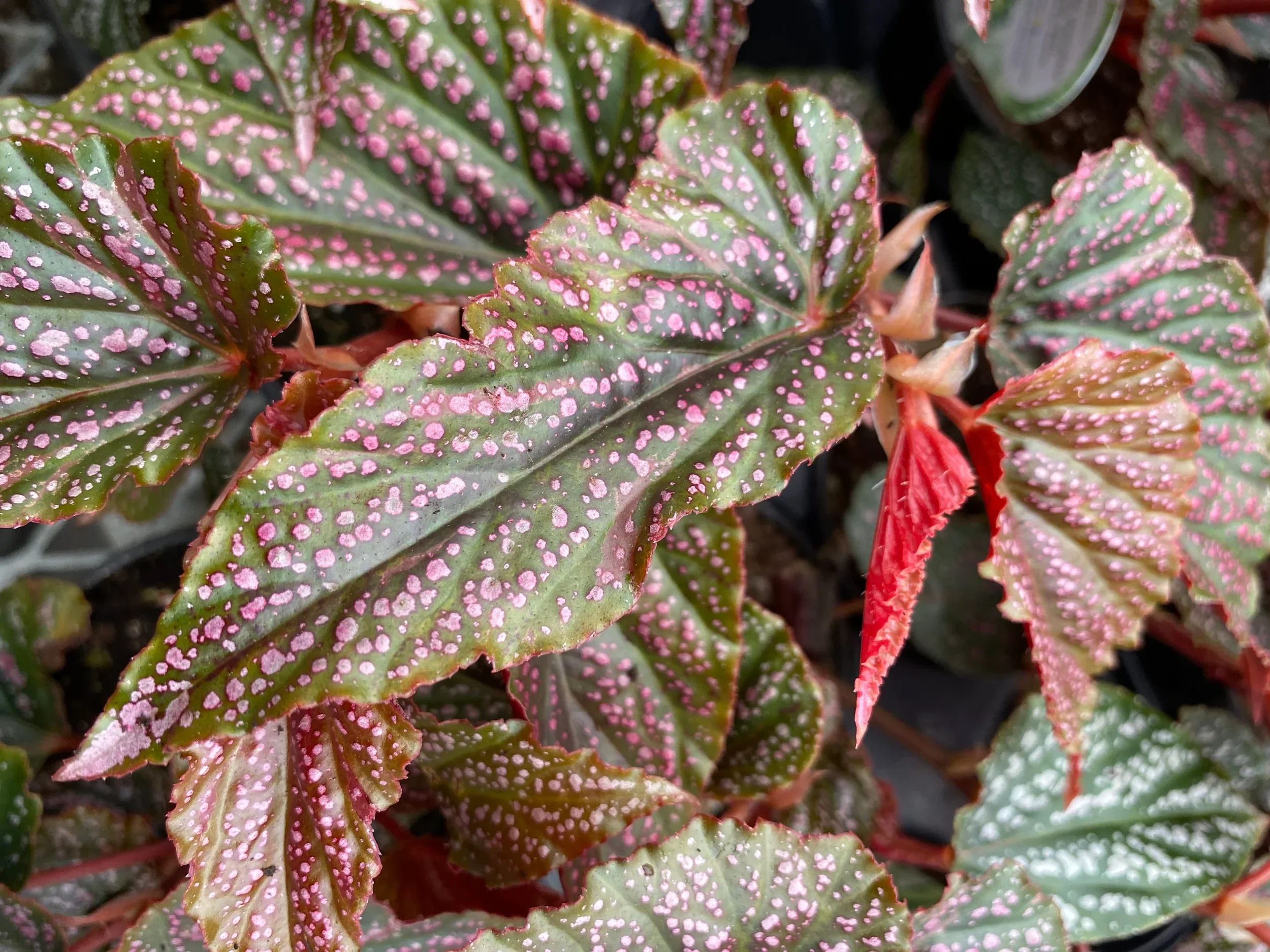
Begonia Maculata Pink Spot
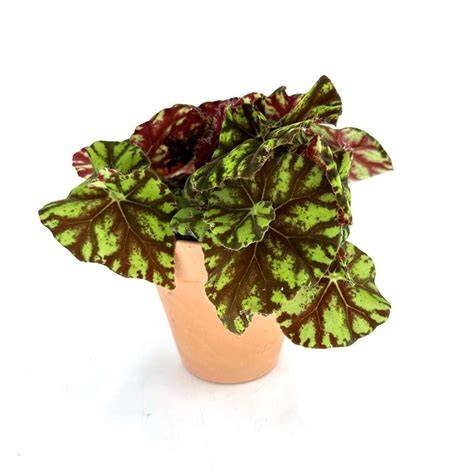
Begonia Mauritius
Begonia Maculata Silver Spot